




7+ Best Real Estate Editing Software & Tools for Agents

Share:
Table of Contents
- 1. Introduction to Real Estate Video Editing Software
- 2. Top Features to Look for in Real Estate Editing Software
- 3. The best real estate editing software
- 4. Comparing the Best Video Editing Software for Real Estate
- 5. Software vs Professional Real Estate Video Editing Services
- 6. Take Your Real Estate Videos to the Next Level with Fotober’s Help
- Conclusion
In today’s competitive real estate market, high-quality video content is no longer optional - it’s a deciding factor in how long buyers stay on a listing and whether they take the next step. From my experience working with real estate agents and photographers, the right real estate editing software can dramatically improve how raw footage is transformed into polished, market-ready videos. In this guide, I’ll walk you through the best real estate editing software and tools, along with practical insights to help you choose the solution that fits your workflow, skill level, and marketing goals.
1. Introduction to Real Estate Video Editing Software
High-quality property videos have become one of the most effective tools in modern real estate marketing. From my experience working alongside real estate agents, photographers, and in-house editors, the difference between an average listing and a high-performing one often comes down to how well the video is edited. With the right real estate editing software, raw footage can be transformed into polished, engaging videos that highlight a property’s strongest features and keep buyers watching longer.
In practical terms, the best real estate video editing software is a tool that allows agents and editors to efficiently turn raw property footage into professional, market-ready videos, while maintaining consistent quality across listings. This includes support for essential workflows such as listing videos, property walkthroughs, drone footage, and virtual tours, without slowing down production or compromising visual clarity.
The best editing software helps you guys for effective videos.
As demand continues to grow for dynamic and visually compelling listings, video editing software for real estate has become essential, not optional. Today’s buyers expect smooth camera movements, clean color grading, balanced lighting, and a clear visual flow that helps them understand the space before ever stepping inside. The right editing tool doesn’t just assemble clips-it helps shape perception.
Storytelling Power: Choosing the best real estate editing software gives editors access to advanced features like color correction, motion tracking, speed ramping, and seamless transitions. In my opinion, this is where software truly proves its value. A well-edited real estate video doesn’t simply show a property-it tells a story that allows potential buyers to imagine themselves living in the space.
Professional Results: Finding the best video editor for real estate means selecting a solution that balances usability with professional output. While beginners may focus on ease of use, experienced editors know that long-term efficiency and consistency matter just as much. From an editor’s perspective, the ideal platform is one that delivers reliable results at scale, especially when handling multiple listings under tight deadlines.
2. Top Features to Look for in Real Estate Editing Software
When selecting the right software, features matter just as much as brand reputation or price. From an editor’s perspective, the tools you choose directly affect production speed, visual consistency, and the overall quality of your real estate videos. In practice, top features to look for in real estate video editing software are those that help editors deliver professional results efficiently, without adding unnecessary complexity to the workflow.
Based on hands-on experience editing real estate listing videos, walkthroughs, and drone footage, the following features consistently make the biggest difference.
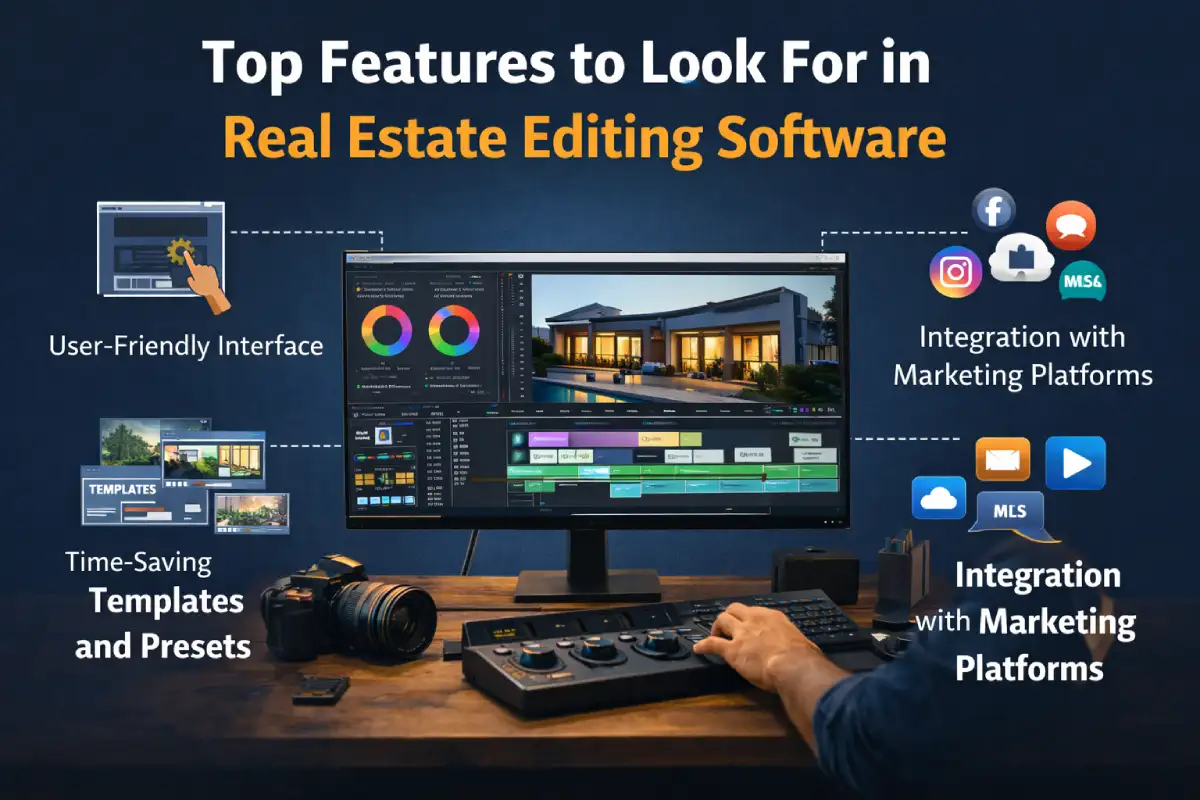
Strong software should integrate seamlessly with platforms such as social media channels, MLS systems, and YouTube.
User-Friendly Interface: A clean, intuitive interface is essential for both beginners and experienced editors. The best video editing software for real estate allows users to focus on storytelling and visual flow rather than spending time navigating complicated menus. In high-volume real estate projects, even small inefficiencies in the interface can add up quickly.
Advanced Editing Tools: Professional-looking property videos require more than basic trimming. Look for software that includes color correction, exposure control, transitions, speed adjustments, and motion effects. These advanced tools help enhance lighting, improve visual balance, and create smooth transitions between spaces, key elements when editing real estate videos that need to feel natural and inviting.
Integration with Marketing Platforms: Strong best real estate editing software should integrate seamlessly with platforms such as social media channels, MLS systems, and YouTube. Easy exporting in multiple formats ensures that listing videos can be published quickly across different platforms without additional conversion steps.
Time-Saving Templates and Presets: Consistency is critical in real estate branding. Many editors rely on templates and presets to maintain a uniform look across multiple listings while reducing editing time. From an editor’s point of view, presets are not about cutting corners-they’re about scaling production while preserving quality.
Audio Editing and Voiceover Capabilities: Clear audio is often overlooked in real estate videos, yet it plays a major role in viewer engagement. The best real estate video editor should support background music control, voiceover recording, and audio balancing to ensure a clean and professional listening experience.
Flexible Export Options: Different platforms require different resolutions, aspect ratios, and file formats. Reliable video editing software for real estate should offer flexible export settings for Instagram, YouTube, property websites, and internal marketing use, without sacrificing video quality.
In my experience, editors don’t choose tools based on how many features they offer, but on how consistently those features work under real production pressure. The best editing software is the one that delivers predictable results, even when deadlines are tight and listing volumes are high.
3. The best real estate editing software
Choosing the best real estate editing software plays a critical role in how efficiently editors can work and how professional the final videos look. In real-world workflows, there is no single “perfect” tool for everyone. Different video editing software for real estate solutions serve different purposes, depending on experience level, content type, and production volume. Below are some of the most widely used options, each with its own strengths and limitations.
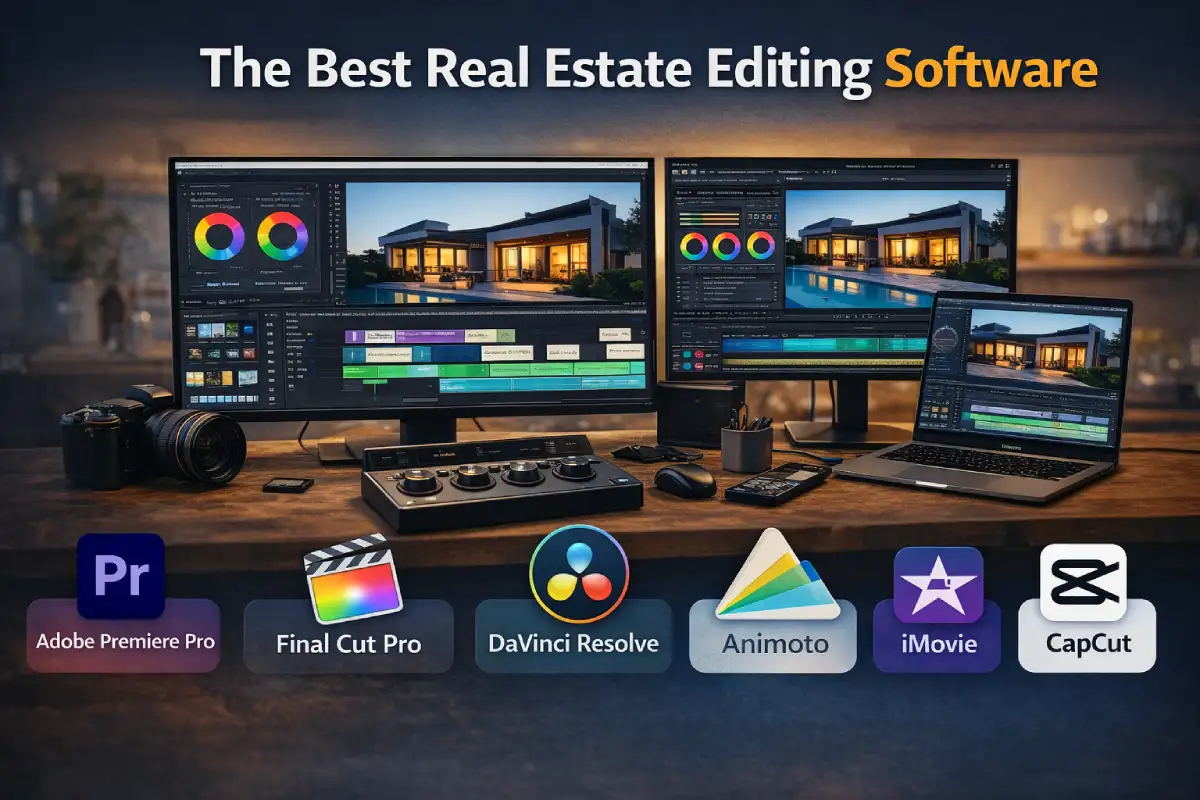
Adobe Premiere Pro
Adobe Premiere Pro is widely regarded as one of the most advanced video editing software options for real estate professionals. It’s a go-to choice for editors who need maximum flexibility and control over every aspect of the edit.
Pros:
· Professional-grade editing tools.
· Strong support for multi-camera editing, motion graphics, and advanced transitions.
· Seamless integration with Adobe Creative Cloud tools such as After Effects and Photoshop.
Cons:
· Steep learning curve, especially for beginners
· Subscription-based pricing can be costly over time
Best for: Experienced editors and production teams handling complex real estate videos, high-volume listings, or branded marketing content.
Final Cut Pro
Final Cut Pro is a powerful real estate editing software designed exclusively for Mac users. It’s known for its speed, stability, and optimized performance when working with large video files.
Pros:
· Fast rendering and smooth playback
· Efficient workflow with magnetic timeline and multi-cam editing
· One-time purchase rather than a subscription
Cons:
· Mac-only ecosystem
· High upfront cost
Best for: Mac-based editors looking for a reliable, high-performance tool for professional real estate video editing.
DaVinci Resolve
DaVinci Resolve stands out as a video editor for real estate thanks to its industry-leading color grading capabilities. It’s often used when visual quality and cinematic appeal are top priorities.
Pros:
· Exceptional color correction and grading tools
· Robust free version available
· Advanced audio editing features
Cons:
· Hardware-intensive
· Learning curve can be challenging for new users
Best for: Editors who prioritize visual quality and are comfortable investing time in mastering advanced editing workflows.
Animoto
Animoto is a cloud-based real estate editing software built for speed and simplicity. It’s designed to help users produce videos quickly without deep technical knowledge.
Pros:
· Extremely easy to use
· Ready-made templates for real estate content
· Fast turnaround time
Cons:
· Limited customization options
· Not suitable for detailed or advanced edits
Best for: Agents or teams who need quick, clean listing videos with minimal editing effort.
Magisto
Magisto is an AI-powered video editing software for real estate that automates much of the editing process. Users upload footage, and the platform generates videos automatically.
Pros:
· Fast and beginner-friendly
· AI-driven editing
· Suitable for short-form social media content
Cons:
· Limited creative control
· Not ideal for detailed or high-end projects
Best for: Users who prioritize speed over customization, especially for social media-focused real estate videos.
iMovie
iMovie is a simple and accessible real estate video editor for beginners, especially those already using Apple devices. While basic, it covers essential editing needs.
Pros:
· Free with Apple devices
· Clean, intuitive interface
· Easy for basic video editing
Cons:
· Limited features
· Not suitable for advanced real estate video production
Best for: Beginners or casual users creating simple property videos.
CapCut
CapCut has become increasingly popular as a video editing tool for real estate agents, particularly for short-form content on social media platforms.
Pros:
· Free and easy to use
· Strong effects, filters, and transitions
· Optimized for short-form vertical videos
Cons:
· Limited capabilities for long-form or cinematic edits
· Export options are less flexible
Best for: Real estate professionals focused on Instagram Reels, TikTok, and other short-form marketing channels.
From working with real estate photographers, agencies, and in-house marketing teams, I’ve noticed that most start by relying on software to handle editing in-house. Over time, as listing volume increases and quality expectations rise, many teams realize that tools alone aren’t always enough-and that’s often when professional real estate video editing services become part of the workflow.
4. Comparing the Best Video Editing Software for Real Estate
When comparing the best real estate editing software, it’s important to look beyond feature lists and focus on how each tool performs in real-world editing scenarios. From an editor’s standpoint, the right editing software for real estate is not necessarily the most powerful one-but the one that fits your workflow, content volume, and delivery timeline.
Below is a practical comparison of the most commonly used real estate video editing tools, based on usability, cost, and editing efficiency.
From my experience editing and reviewing real estate videos across different markets, this comparison highlights a key truth: there is no single best video editor for real estate that fits every situation. High-end tools like Adobe Premiere Pro or DaVinci Resolve excel in professional environments but require time, skill, and strong hardware. On the other hand, simpler tools such as CapCut or Animoto work well for fast-turnaround social media content, but quickly reach their limits as quality expectations rise.
 How Editors Should Read This Comparison.
If your focus is branding, luxury listings, or consistent quality across multiple properties, relying solely on software can eventually slow you down. This is often the point where teams start exploring professional support. You can read more about this transition in our guide on
Editor’s Advice: Choose your best real estate editing software based on how often you edit, how fast you need to deliver, and how consistent your quality needs to be. In many real-world cases, combining basic in-house tools with professional editing support offers the best balance between speed, cost, and results.
5. Software vs Professional Real Estate Video Editing Services
One question I hear often from agents and in-house teams is whether they should rely on real estate editing software or start outsourcing their edits. From an editor’s point of view, the answer isn’t about which option is better-it’s about when each option makes sense. Both software and professional services have their place in a real estate video workflow.
When Software Is Enough
There are plenty of situations where video editing software for real estate does the job just fine. If you’re working with simple footage and clear expectations, software can be a practical solution.
· Social media videos: Short-form content for Instagram Reels, TikTok, or Facebook works well with tools like CapCut or template-based editors.
· Agent-shot footage: When agents shoot their own videos, speed often matters more than polish. Basic software helps get content out quickly.
· Lower budgets: For teams watching costs closely, editing in-house using affordable tools can be a reasonable starting point.
· Flexible deadlines: When timing isn’t tight, learning and tweaking edits in software becomes less stressful.
In these cases, the best software helps maintain momentum without overcomplicating the process.
Limitations of Video Editing Software
That said, software has clear limits-ones editors notice immediately.
· It can’t fix poorly captured footage: Bad lighting, shaky shots, or uneven exposure can’t always be corrected, even with advanced tools.
· Lack of storytelling for premium listings: High-end properties require pacing, visual flow, and subtle emphasis that templates simply can’t deliver.
· Inconsistent branding: For brokerages managing multiple listings, maintaining a consistent visual style across videos is difficult when edits are handled by different people using different tools.
· Time investment: Learning how to edit real estate videos well takes time. For many teams, that time is better spent on sales, marketing, or client relationships.
From an editor’s perspective, software works best when expectations are modest. Once quality becomes a competitive advantage, those limits start to show.
When to Outsource Real Estate Video Editing
Outsourcing becomes the smarter choice when quality, speed, and consistency all matter at the same time.
· Luxury listings: High-value properties demand cinematic storytelling and refined visuals.
· High-volume production: Editing dozens of videos each week quickly overwhelms in-house teams.
· Long-term branding: Consistent color, pacing, and style help build brand recognition over time.
· MLS, commercial, and drone footage: These formats require technical precision and experienced handling.
This is where professional real estate video editing services add real value. Working with a dedicated editing team allows agents and brokerages to scale content without sacrificing quality or burning out internally. You can explore how this approach fits into a broader strategy in our guide on.
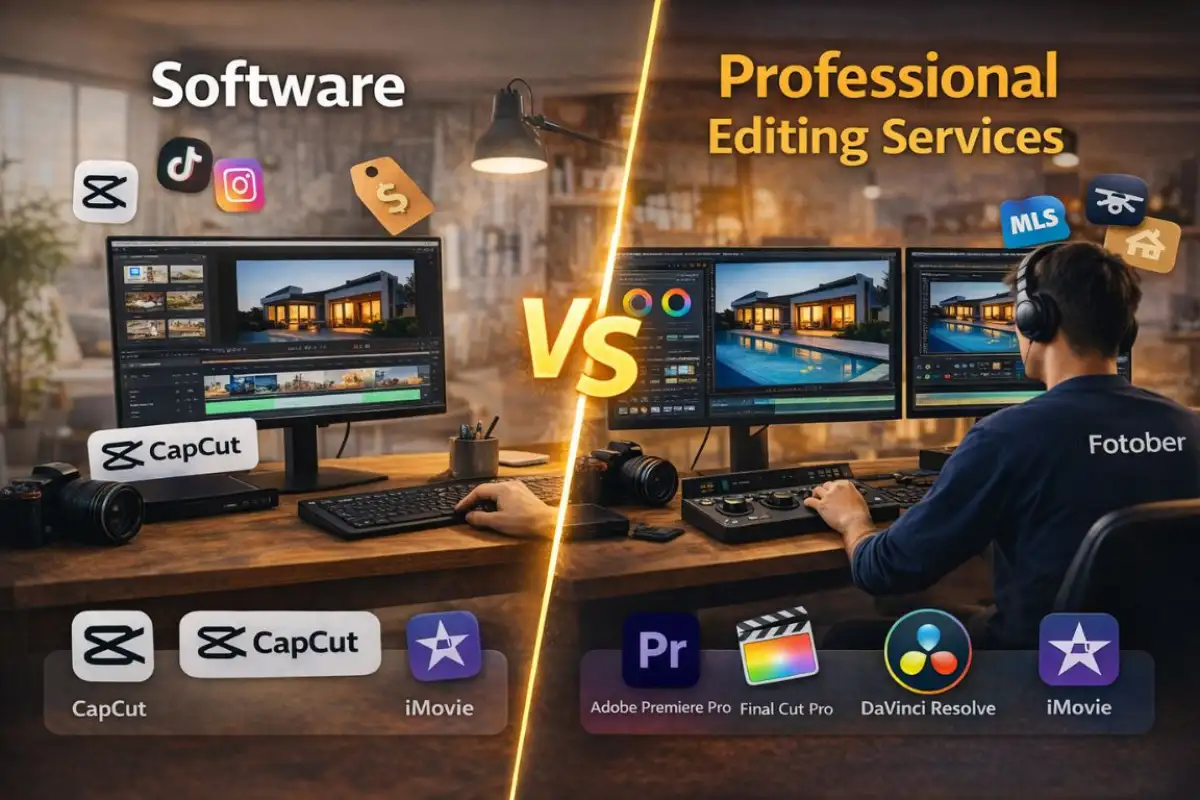
Editor’s Take: Most teams I’ve worked with start by doing everything in-house using software. Over time, as expectations rise and volume increases, outsourcing isn’t about losing control-it’s about gaining consistency, speed, and peace of mind.
6. Take Your Real Estate Videos to the Next Level with Fotober’s Help
Most real estate teams I’ve worked with start by relying on the best real estate editing software. And honestly, that makes sense. Software is accessible, affordable, and good enough for many everyday use cases. But at a certain point, usually when listing volume increases or brand expectations rise, software alone starts to feel limiting.
That’s where professional support becomes less about “outsourcing” and more about protecting quality and consistency. Fotober works with agents, photographers, and brokerages who already understand the value of video, but don’t want to compromise results because of time, workflow, or technical constraints.
As a professional real estate video editing service, Fotober focuses on the parts that software can’t always handle well: balancing difficult lighting, matching color across different shoots, refining pacing for property walkthroughs, and ensuring every video aligns with a brand’s visual identity. From listing videos and drone footage to virtual home staging and long-form marketing content, the goal is simple: deliver videos that feel intentional, not rushed.
From an editor’s point of view, the biggest advantage of working with a dedicated team is reliability. Instead of spending hours tweaking settings in video editing software for real estate, agents and marketing teams can stay focused on selling, marketing, and client relationships, knowing their videos will meet the same standard every time.
Fotober isn’t about replacing your tools. It’s about complementing them when quality, speed, and scale all matter at once.
Conclusion
Choosing the best real estate editing software is an important step in building an effective video marketing workflow. The right tools can help beginners get started, support agents in producing their own content, and enable teams to handle basic editing in-house. Software gives flexibility-but it also comes with limits.
As expectations grow, many professionals realize that tools alone aren’t always enough to maintain visual consistency, storytelling quality, and turnaround speed. This is where professional real estate video editing services become a practical extension of the workflow rather than an extra expense.
Whether you continue editing in-house, outsource entirely, or combine both approaches, the key is choosing the setup that supports your long-term goals-not just your current workload. Strong real estate videos aren’t about flashy effects or complex tools; they’re about clarity, flow, and helping buyers connect with a space.
From an editor’s perspective, the best results usually come from knowing when to use software and when to let experienced editors handle the details that truly make a difference.
Fotober is a professional real estate photo & video editing company trusted by photographers and real estate professionals to enhance property images with precision, speed, and consistency.
· Fanpage Official: Fotober.media
· YouTube Channel: Follow Fotober
· TikTok Channel: @fotober
· Instagram: fotobervn_
· Email supporter: [email protected]
· Hotline: +84 942 110 297
Related posts

Modern Luxe Interior Design: Elements, Style Guide and How to Stage It
October 10, 2026

Minimalist Interior Design: Characteristics, Style Guide, and Staging
October 8, 2026

Coastal Interior Design: Style Definition & Staging Guide
September 30, 2026

Contemporary Interior Design: Key Elements and How to Stage This Style
September 30, 2026
