




AI Photo Editing Tools for Real Estate

Share:
Table of Contents
- 1. Why AI Is Transforming Real Estate Photo Editing in 2026
- 2. Key Features to Look for in AI Real Estate Photo Editing Tools
- 3. Best AI Real Estate Photo Editing Tools in 2026
- 4. Free vs Paid AI Real Estate Photo Editing Options
- 5. Future Trends of AI Real Estate Photo Editing Beyond 2026
- 6. AI Tools vs Professional AI-Assisted Editing Services
- Conclusion
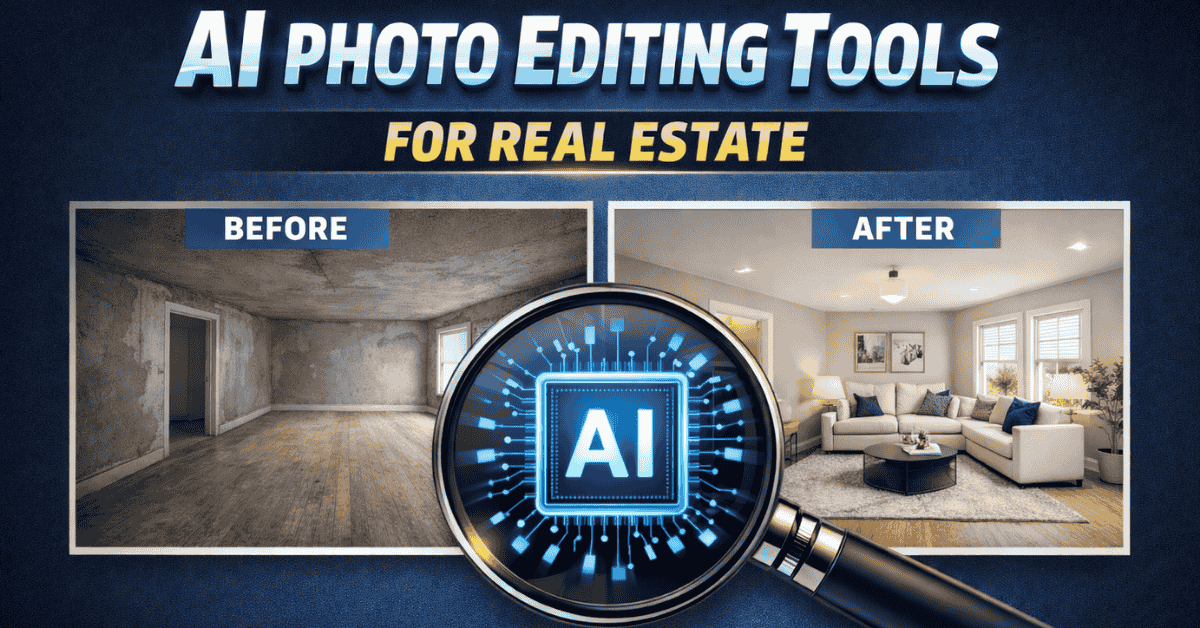
The real estate industry has always been visually driven, but in 2026, visual quality alone is no longer enough. Speed, scalability, and consistency now define success. As listing volumes increase and buyer attention spans shrink, real estate professionals are turning to artificial intelligence to meet rising expectations. AI-powered photo editing has become a foundational part of modern property marketing, reshaping how images are processed, delivered, and optimized across platforms.
 AI photo editing tools in real estate
This guide explores how AI photo editing tools are transforming real estate photography, what features matter most, and how professionals can choose between tools, platforms, and full-service solutions.
1. Why AI Is Transforming Real Estate Photo Editing in 2026
AI photo editing tools for real estate are software systems that use machine learning, computer vision, and image recognition to automatically enhance property photos.
What Are AI Photo Editing Tools for Real Estate?
These tools analyze structural elements such as walls, ceilings, windows, floors, and outdoor features, then apply intelligent adjustments to improve clarity, lighting, and overall presentation.
Unlike traditional presets, modern AI understands spatial context. It knows the difference between interior and exterior lighting, recognizes architectural boundaries, and adjusts images accordingly. In 2026, ai real estate photo editing is not about replacing creativity. It is about removing technical bottlenecks so marketing teams can move faster.
Overview of AI Adoption in Real Estate Marketing
The adoption of AI across real estate marketing has accelerated due to three converging pressures:
- Higher content demand
Listings now require not just standard photos, but multiple versions for MLS, social media, email campaigns, and paid ads. - Shorter listing cycles
Properties are expected to go live within hours, not days, especially in competitive urban markets. - Brand consistency at scale
Brokerages managing hundreds of agents need visuals that look consistent regardless of who captured the photos.
AI-based editing allows teams to standardize output while dramatically reducing production time. This has made AI an operational necessity rather than a novelty.
Faster Turnaround, Lower Cost, Consistent Quality
Speed is one of the most tangible benefits of AI-powered editing. Tasks that once required manual masking, exposure blending, and color correction can now be completed automatically. This allows photographers to deliver images faster and agents to launch listings sooner.
Cost efficiency follows naturally. By automating repetitive processes, ai real estate photo editing reduces the amount of manual labor required per image. At the same time, quality improves through standardized processing rules that eliminate inconsistency caused by human fatigue or stylistic differences.
The result is a workflow that balances speed, affordability, and professional presentation, three priorities that are increasingly difficult to achieve simultaneously without automation.
Manual Editing vs AI Tools vs Hybrid Workflows
Manual editing remains valuable for artistic control, but it is difficult to scale. Fully automated AI tools offer speed but can struggle with complex scenes or luxury properties. Hybrid workflows combine AI efficiency with human judgment, allowing editors to refine details that automation may overlook.
In 2026, hybrid models dominate professional environments because they deliver predictable quality at scale while preserving realism and architectural accuracy.
2. Key Features to Look for in AI Real Estate Photo Editing Tools
Automatic sky replacement has become one of the most essential capabilities in modern real estate photo editing, especially as listings compete across visually saturated platforms. Advanced AI systems are now able to accurately detect complex skylines, rooflines, trees, chimneys, and architectural edges with a high level of precision. This ensures that the replacement sky blends seamlessly into the original image, without harsh cut lines, color bleeding, or unnatural halos around buildings and foliage.
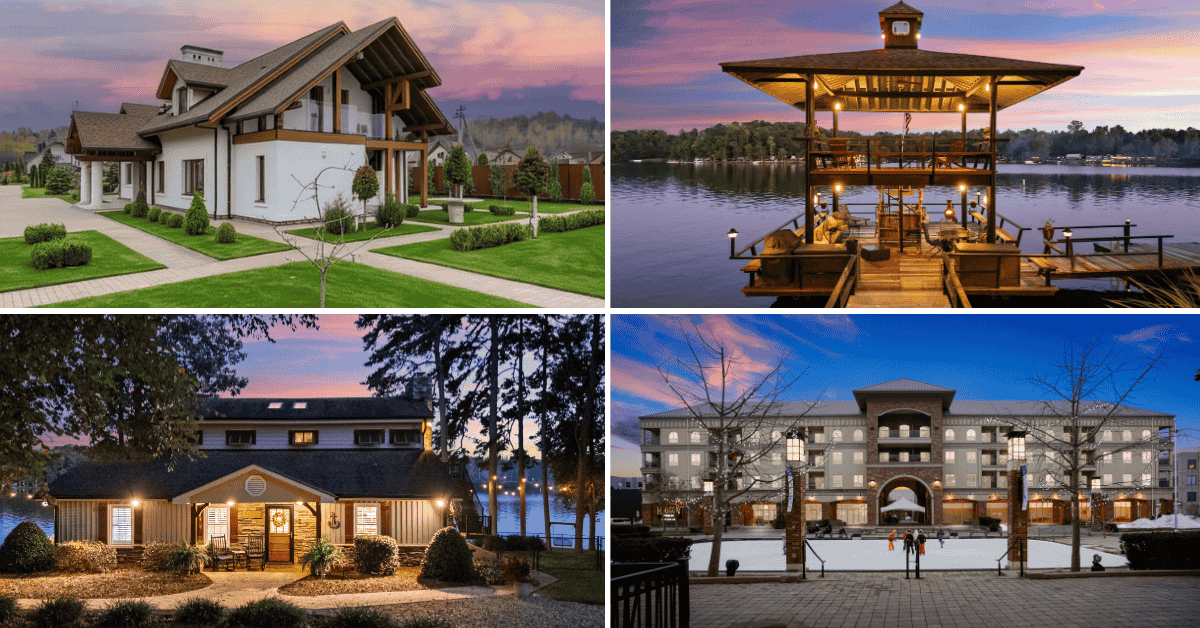 Automatic sky replacement
Automatic Sky Replacement & Lighting Correction
Unlike early-generation tools that simply overlaid a generic blue sky, modern AI analyzes the original lighting direction, time of day, and color temperature. The replacement sky is then matched to these conditions, preserving realistic shadows and highlights on the property itself. This level of contextual awareness prevents images from looking artificial or over-processed, an important factor for MLS compliance and buyer trust.
Lighting correction works hand-in-hand with sky replacement to enhance overall image balance. AI evaluates both global and localized exposure, adjusting bright highlights and lifting dark shadow areas without flattening the image. Interior spaces visible through windows are carefully balanced so they remain clear and inviting, while exterior elements retain texture and depth. This creates a natural, evenly lit appearance that closely reflects how the property would look in ideal real-world conditions.
One of the most practical advantages of AI-based lighting correction is its ability to compensate for less-than-perfect shooting environments. Overcast skies, uneven sunlight, or time constraints during a shoot no longer mean compromised visuals. AI can simulate optimal lighting conditions, allowing properties photographed in challenging weather or tight schedules to remain visually competitive.
For day to dusk service from Fotober, this means greater flexibility and consistency. Listings no longer depend solely on ideal weather or extended shooting windows. Instead, AI-powered sky replacement and lighting correction ensure every property is presented at its best: bright, welcoming, and market-ready, regardless of external limitations.
Object Removal & Scene Cleanup
Item removal and scene cleanup play a critical role in shaping first impressions, directly influencing how buyers perceive a property’s value and livability. In real estate photography, even minor distractions, such as trash bins, parked vehicles, power lines, garden hoses, or uneven landscaping, can draw attention away from the property itself. AI-powered scene cleanup addresses these issues by intelligently identifying and removing unwanted elements while preserving the integrity of the surrounding environment.
Modern AI systems do far more than simply erase objects. They analyze textures, patterns, lighting, and spatial context to realistically reconstruct the background once an object is removed. For example, when eliminating a parked car from a driveway, AI can seamlessly rebuild pavement details, shadows, and reflections. When removing patchy grass or debris, it can regenerate natural-looking lawn textures that match the rest of the yard. This contextual reconstruction is what separates professional-grade AI tools from basic content-aware fill methods.
Subtlety is essential in scene cleanup. The most effective AI tools avoid aggressive smoothing, unnatural repetition, or overly “perfect” surfaces that make images feel artificial. Instead, they aim for realism, maintaining slight imperfections that keep the property believable while still visually appealing. This balance is especially important for MLS listings, where authenticity and accuracy are closely scrutinized.
Object removal is particularly valuable for urban properties, where external clutter is difficult to control, and for listings photographed before final staging or landscaping is complete. It allows agents to present a clean, distraction-free version of the property without costly reshoots or extensive manual retouching. Ultimately, AI-driven scene cleanup helps buyers focus on space, layout, and potential rather than temporary visual noise, making it a powerful tool for effective real estate marketing.
AI Color Balance & HDR Enhancement
Color balance and HDR enhancement are foundational to how buyers emotionally respond to real estate imagery. Subtle shifts in color temperature, contrast, or saturation can significantly change how a space feels: warm and welcoming versus cold and uninviting. Advanced AI systems analyze white balance, tonal distribution, and color relationships across the entire image to produce results that feel natural, consistent, and visually appealing.
AI-based color balance goes beyond simple global adjustments. It evaluates different zones within a photo—walls, ceilings, flooring, furniture, and natural light sources, and applies localized corrections where needed. This ensures that white walls remain neutral rather than yellow or blue, wood tones retain their natural warmth, and accent colors appear accurate without being over-saturated. By maintaining realistic color relationships, AI helps spaces feel cohesive and true to life, which is essential for building buyer trust.
HDR enhancement further improves image quality by intelligently blending multiple exposure values into a single, balanced frame. In real estate photography, scenes often contain extreme contrasts: bright windows alongside darker interiors, or sunlit exteriors paired with shaded areas. AI-driven HDR processing preserves exterior views through windows while simultaneously lifting interior shadows, allowing both areas to be clearly visible without harsh transitions or unnatural glow effects.
The most effective HDR enhancement is virtually invisible. Rather than producing the high-contrast, overly dramatic look associated with early HDR techniques, modern AI prioritizes realism. Details are enhanced without flattening depth or introducing halos, and the final image feels clean, spacious, and professionally lit.
When done correctly, AI color balance and HDR enhancement do not draw attention to themselves. Instead, they quietly elevate image clarity and atmosphere, helping buyers focus on the property’s layout, lighting, and potential exactly as intended in high-quality real estate marketing.
Batch Processing for High-Volume Listings
Batch processing is a critical feature for real estate photographers, media teams, and agencies that manage high volumes of listings on a daily or weekly basis. In fast-paced markets, efficiency is not just a convenience, it is a competitive advantage. AI-powered batch processing enables entire sets of images from a single property, or even multiple listings, to be edited simultaneously using consistent rules and visual standards.
Instead of adjusting exposure, color balance, sky replacement, and perspective corrections one image at a time, AI systems analyze a representative sample and apply optimized enhancements across the full batch. This ensures uniform brightness, color tone, and overall style throughout the entire photo set, which is essential for maintaining a professional and cohesive presentation. Consistency across images helps listings feel polished and intentional rather than fragmented or uneven.
From an operational standpoint, batch processing saves significant time and labor. Tasks that would normally take hours of repetitive manual work can be completed in minutes, allowing photographers and editors to focus on higher-value tasks such as quality review, creative refinement, or client communication. For agencies working with multiple photographers, batch processing also minimizes stylistic variation caused by different shooting conditions or individual editing habits.
Batch capabilities are especially valuable for brokerages with strict publishing deadlines. Faster turnaround times mean listings can go live sooner, giving properties a better chance to capture early buyer attention. In competitive markets where speed matters, the ability to process large volumes quickly without sacrificing quality can directly impact marketing performance and deal velocity.
Human-in-the-Loop vs Full Automation
When adopting ai real estate photo editing, one of the most important strategic decisions is choosing between full automation and a human-in-the-loop approach. Fully automated systems are designed to maximize speed and efficiency. Images are processed instantly based on predefined algorithms, making this approach well suited for high-volume, lower-value listings or situations where rapid turnaround is the top priority.
However, speed alone is not always enough. Human-in-the-loop systems integrate professional editors into the workflow to review, refine, and validate AI-generated results. While AI handles repetitive and time-intensive tasks, such as exposure correction, sky replacement, and color balancing, human editors provide judgment, contextual understanding, and aesthetic control. This additional layer of oversight ensures that images align with buyer expectations, brand guidelines, and regional market preferences.
In high-value or luxury markets, the margin for visual error is extremely small. Buyers in these segments are highly sensitive to unrealistic lighting, inaccurate colors, or subtle distortions that can undermine trust. Human oversight helps catch and correct these issues, ensuring the final images feel authentic, refined, and market-appropriate. It also allows for nuanced decisions, such as preserving architectural character or adjusting tones to match the emotional positioning of a premium property.
Choosing between full automation and human-in-the-loop editing ultimately depends on the listing’s purpose, audience, and acceptable level of risk. Entry-level or time-sensitive listings may benefit from automation, while high-end properties and brand-focused marketing campaigns typically require the added assurance that only human expertise can provide.
3. Best AI Real Estate Photo Editing Tools in 2026
AI-only editing platforms are built around speed, automation, and ease of use. These systems typically require minimal user input, often just an image upload and a few basic preferences, before automatically applying enhancements such as exposure correction, color balancing, sky replacement, and basic object cleanup. For real estate professionals who need fast results, these platforms offer a highly accessible solution.
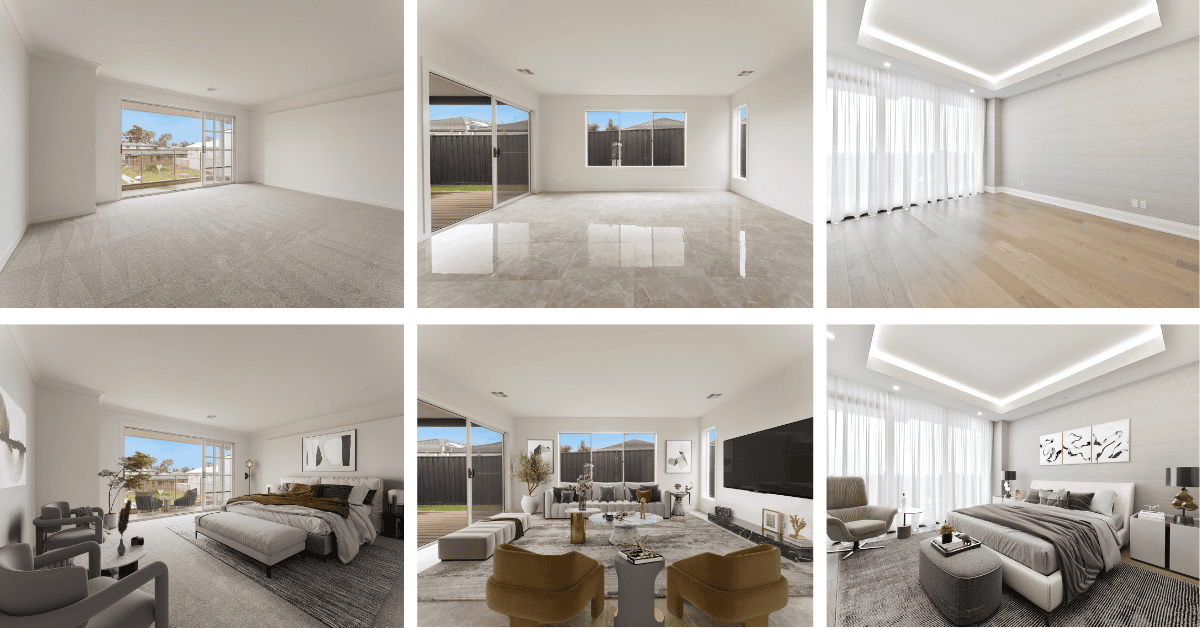 AI-only platforms in real estate editing
AI-Only Editing Platforms
AI-only tools are particularly well suited for quick previews, draft listings, internal reviews, or budget-conscious projects where turnaround time matters more than fine detail. They allow agents to move properties online quickly and test market response without waiting for manual edits. For newer agents or high-volume environments, this simplicity can be a major operational advantage.
However, the limitations become more apparent with complex scenes or premium properties. AI-only platforms often rely on fixed rules and generalized models, which means they may struggle with nuanced lighting conditions, unique architectural features, or properties that require a tailored visual approach. The lack of deep customization and human judgment can result in images that feel technically correct but visually generic, making them less suitable for luxury listings or brand-driven marketing.
Hybrid AI + Human Editing Platforms
Hybrid platforms combine the efficiency of AI automation with the expertise of professional human editors. In this model, AI performs the heavy lifting, handling repetitive tasks such as sky replacement, exposure normalization, perspective correction, and initial color balancing. Human editors then step in to review and refine the output, ensuring realism, accuracy, and aesthetic consistency.
This approach offers the best of both worlds. AI real estate photo editing accelerates production and reduces costs, while human oversight addresses subtle issues that automation alone may miss, such as texture accuracy, architectural integrity, or emotional tone. As a result, hybrid platforms deliver polished, market-ready images without sacrificing speed.
In 2026, this model has become the industry standard for professionals who require both scalability and quality. It is particularly favored by real estate photographers, brokerages, and marketing agencies that manage diverse portfolios and need reliable results across different property types and price segments.
All-in-One Marketing AI Tools for Realtors
All-in-one marketing AI tools extend beyond photo editing to offer a broader suite of features, including virtual staging, short-form video highlights, floor plan generation, and social media-ready assets. These platforms are designed to simplify the marketing process by centralizing multiple functions into a single interface.
The primary advantage of all-in-one tools is convenience. Agents can create a wide range of marketing materials without switching between platforms or coordinating multiple vendors. This makes them especially appealing to solo agents or small teams managing their own marketing.
However, this breadth often comes at the expense of depth. Because these platforms aim to cover many use cases, their photo editing capabilities may not be as refined or flexible as specialized editing solutions. They are best suited for agents who prioritize efficiency and integration over maximum image fidelity and customization.
4. Free vs Paid AI Real Estate Photo Editing Options
When Free AI Tools Are Enough
There are limited scenarios where ai real estate photo editing free tools can be sufficient. These include testing workflows, creating draft visuals, or preparing internal presentations. Free tools allow users to explore AI capabilities without financial commitment.
For early-stage agents or experimental campaigns, this option can provide temporary value.
Why Paid Tools Deliver Better Results
Paid solutions offer higher resolution outputs, better consistency, advanced customization, and customer support. They also reduce the risk of visible artifacts or inconsistent processing that could harm brand credibility.
Many professionals prefer structured ai real estate photo editing services because they deliver predictable quality, especially for client-facing work.
5. Future Trends of AI Real Estate Photo Editing Beyond 2026
Beyond 2026, AI will continue evolving toward deeper spatial understanding. Expect improvements in perspective correction, architectural accuracy, and scene realism. AI will also become more adaptive, learning stylistic preferences and applying them automatically across projects.
 AI trend in real estate editing
Integration between photography, video, and 3D visualization will further streamline content creation, enabling multi-format marketing from a single shoot.
AI-powered solutions are ideal for agents, photographers, marketing teams, and brokerages operating in competitive markets. Those managing high volumes or working under tight deadlines benefit most from professional ai real estate photo editing services that combine automation with expertise.
6. AI Tools vs Professional AI-Assisted Editing Services
Standalone tools provide efficiency, but professional services provide accountability and refinement. Human editors interpret buyer psychology, regional preferences, and architectural intent areas where automation alone remains limited.
This is why many businesses rely on comprehensive them rather than software alone.
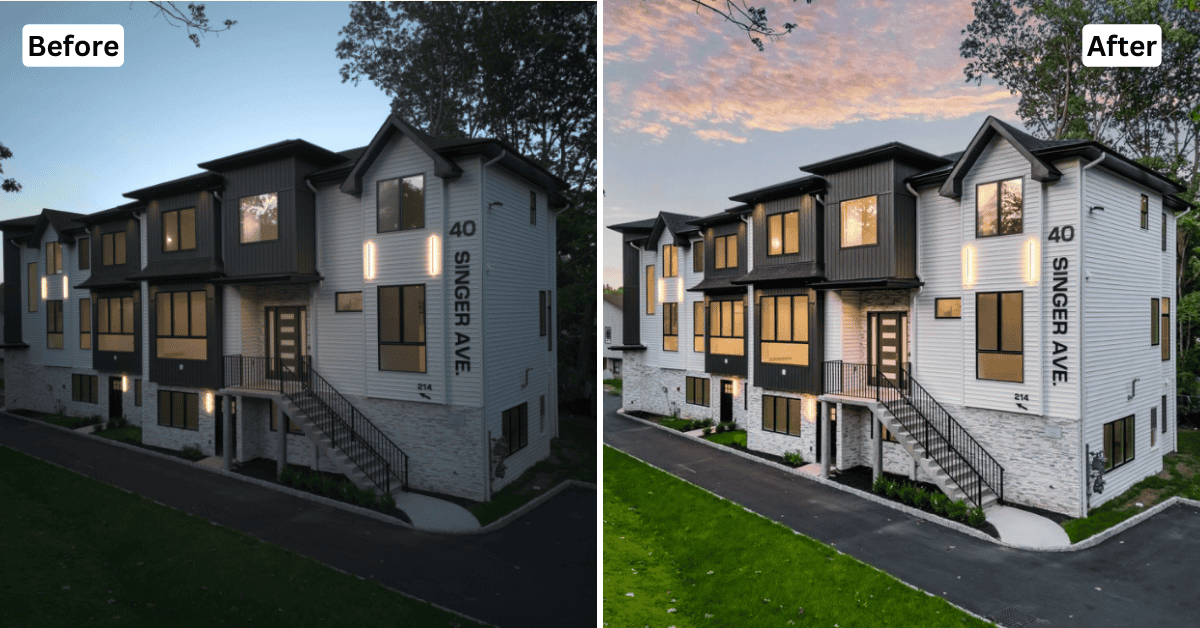 Result from AI processing with experienced human editors
Fotober delivers a hybrid editing model that combines advanced AI processing with experienced human editors. AI handles time-intensive tasks not only single real estate photos, but 360 image enhancement such as lighting correction, sky replacement, and batch optimization, while professional editors ensure realism, accuracy, and consistency.
This approach allows Fotober to support both individual agents and enterprise-level teams with reliable turnaround times and scalable capacity.
Conclusion
In today’s competitive market, visual presentation is inseparable from marketing success. By 2026, using AI in real estate photo editing has become an essential operational tool rather than an optional enhancement. The most effective workflows blend intelligent automation with professional judgment, ensuring images are both efficient to produce and compelling to view.
As technology continues to advance, ai real estate photo editing will remain a driving force behind faster listings, stronger branding, and more effective property marketing.
- Facebook: fotobermedia.co
- Youtube Channel: Fotober
- TikTok Channel: @fotober
- Instagram: fotober_media
- Email support: [email protected]
- Hotline: +84 942 110 297
Related posts
Cincinnati Housing Market 2026: Prices, Trends, and What It Means for Buyers, Sellers, and Investors
October 20, 2026

Modern Luxe Interior Design: Elements, Style Guide and How to Stage It
October 10, 2026

Minimalist Interior Design: Characteristics, Style Guide, and Staging
October 8, 2026

Coastal Interior Design: Style Definition & Staging Guide
September 30, 2026
